Elder Law & Medicaid Planning in Huntersville, NC
Find Huntersville elder law and Medicaid planning attorneys. See what to look for in long-term care and asset protection planning, and how our scoring works.
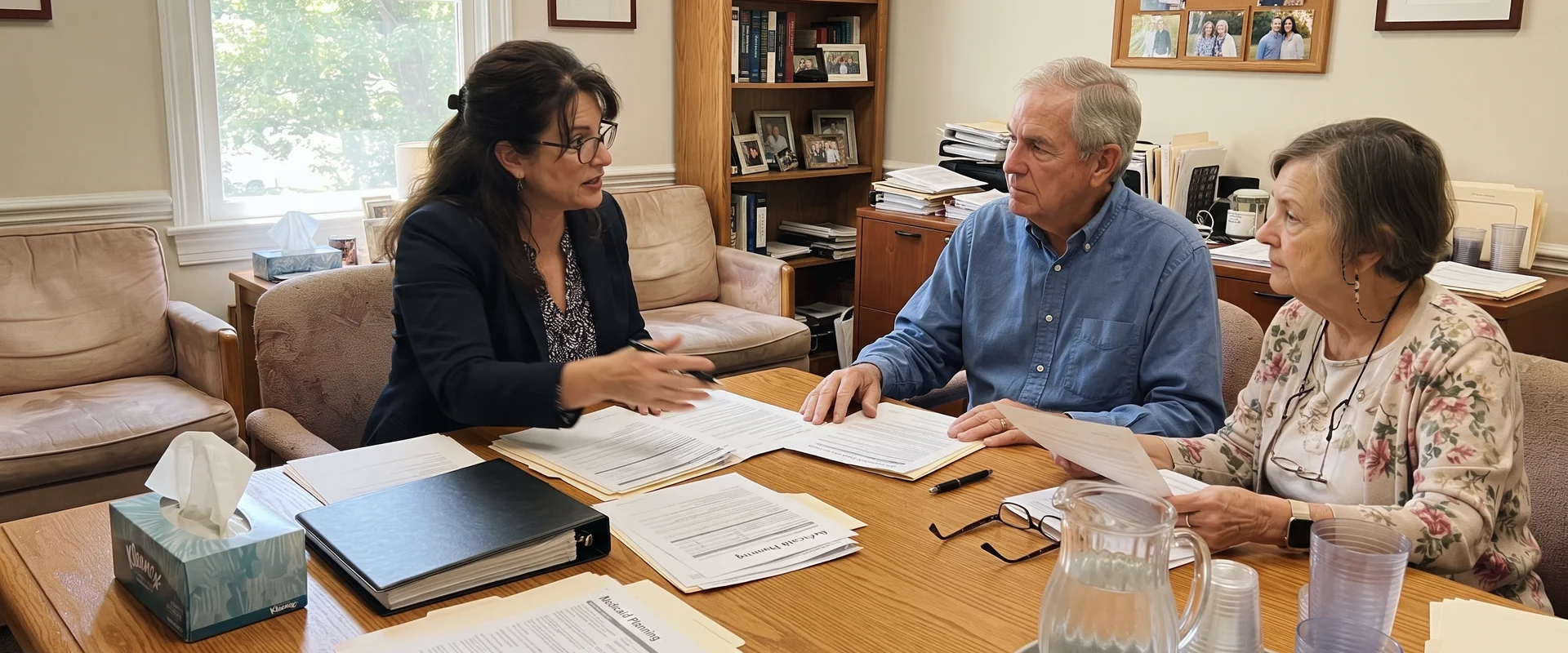
Elder law covers the legal work families need as they age or start caring for an aging parent: long-term care planning, Medicaid eligibility and applications, special needs trusts, guardianship and conservatorship, and asset protection ahead of a nursing home or assisted living stay. In North Carolina, Medicaid has strict income and asset limits along with a five-year look-back period on gifts and transfers, so timing matters. An attorney who works in this area regularly can spot problems (a house titled the wrong way, an annuity that disqualifies a spouse, a gift made two years ago that triggers a penalty period) before they cost a family tens of thousands of dollars.
We track 16 elder law and Medicaid planning attorneys serving the Huntersville area. Some are solo practitioners who focus almost entirely on Medicaid crisis planning, others are part of larger estate planning firms that handle elder law alongside wills and trusts. Neither model is automatically better: what matters is how many Medicaid applications and appeals the attorney has actually filed, whether they know the local Department of Social Services caseworkers and their quirks, and whether they explain costs and timelines clearly before you sign an engagement letter.
When comparing firms, look at how they handle the initial consultation (many offer a free or low-cost intake to assess whether crisis planning, pre-planning, or a special needs trust fits your situation), how they charge (flat fee versus hourly), and whether they stay involved through the actual Medicaid application, not just the legal paperwork. Our scoring weighs experience specific to elder law and Medicaid work, client feedback, responsiveness, and transparency about fees. For the full ranked list with scores and details on each firm, see our best estate planning attorneys in Huntersville guide, and read our methodology to see exactly how we evaluate and rank each one.
Find an estate planning attorney for elder law & medicaid planning in Huntersville, NC
No obligation, and it is free. Tell us what you need and we'll connect you with estate planning attorneys in Charlotte who handle your situation.
All elder law & medicaid planning in Huntersville, NC, ranked by score and relevance
0 businesses, scored on recent reviews. The order weighs each business's overall score by how much of its reviewed work is elder law & medicaid planning, so a lower-scored specialist can rank above a higher-scored generalist.
When you submit an enquiry through our forms, we may pass it to partner providers who can do the work, and we may receive a referral fee. Our rankings and scores come from our published method only and are never influenced by referral fees.
Common questions about elder law & medicaid planning
- How much does an elder law or Medicaid planning attorney cost in Huntersville?
- Many firms offer a flat fee for Medicaid application and asset protection work, often ranging from around $2,000 to $6,000 depending on complexity, while an initial consultation is frequently free or a few hundred dollars. Guardianship or contested cases are usually billed hourly since the amount of court work is unpredictable. Ask for a written fee agreement upfront so you know what's included.
- When should a family actually hire an elder law attorney?
- The best time is before a health crisis, ideally when a parent is still healthy enough to plan ahead, since North Carolina's Medicaid look-back period is five years and certain asset transfers made too close to applying can trigger a penalty. That said, plenty of families come in during a crisis (a sudden hospitalization or nursing home placement), and a good elder law attorney can still do meaningful protection planning even then, just with fewer options than if you'd started earlier.
- What should I expect during the Medicaid planning process?
- Expect an initial review of income, assets, and any past transfers, followed by a plan that might include spending down assets on exempt items, setting up an irrevocable trust, converting countable assets to an income stream via an annuity, or restructuring how a home or other property is titled. The attorney should then help prepare and file the actual Medicaid application with the county Department of Social Services and respond to any requests for additional documentation.
- How can I judge whether an elder law attorney is any good?
- Ask how many Medicaid applications they've filed in the past year and whether they handle appeals when a case is denied, since that's a good proxy for how current their knowledge of local DSS practices is. Look for clear, plain-language communication about a topic that's naturally confusing, a written fee structure, and willingness to explain the tradeoffs of different planning strategies rather than pushing one product like an annuity or trust as a one-size-fits-all answer.