Special Needs Planning in Concord, NC
A guide to special needs planning attorneys in Concord, NC: what the work involves, what to check before hiring, and how our rankings can help.
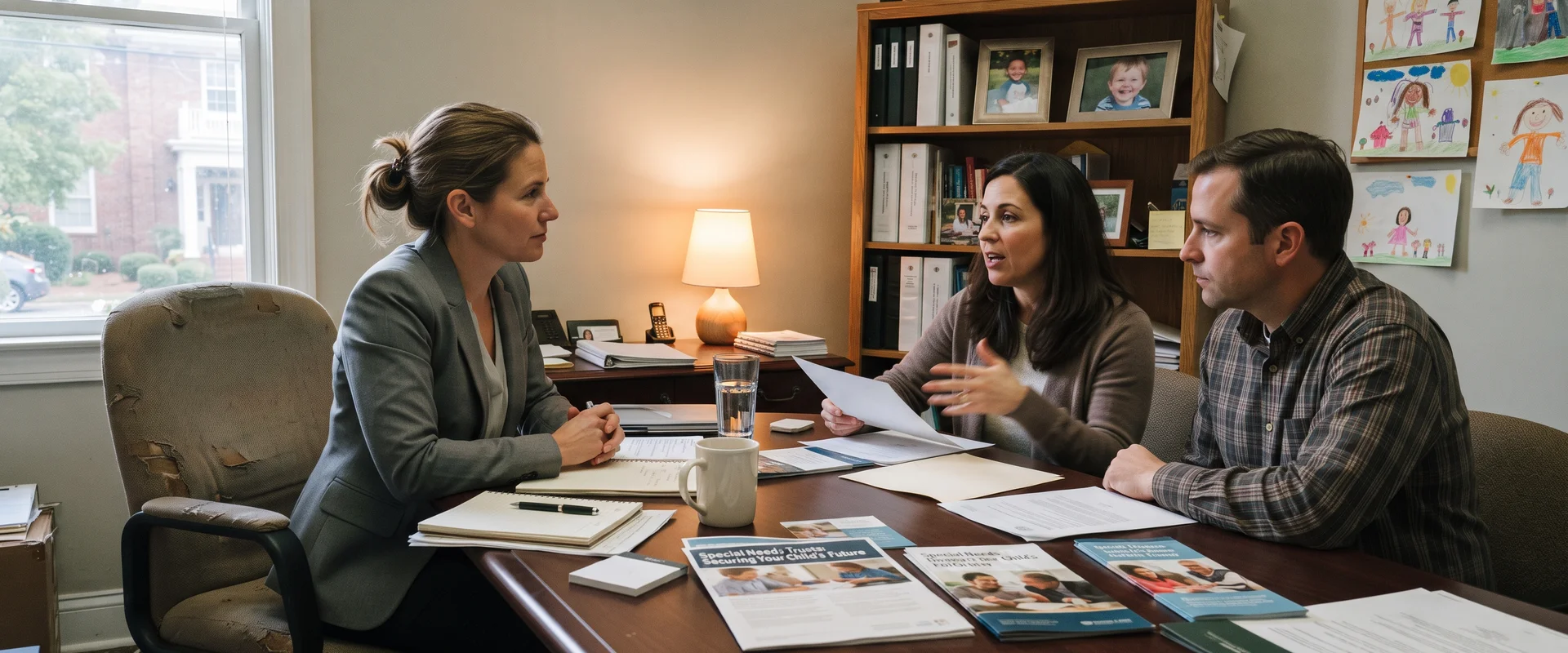
Special needs planning is a branch of estate planning built around one goal: protecting a person with a disability financially without cutting them off from Medicaid, Supplemental Security Income (SSI), or other means-tested government benefits. In Concord, 14 attorneys in our directory handle this work, and it's a narrower skill set than general estate planning. It usually involves setting up a special needs trust (first-party or third-party, depending on whose money is funding it), coordinating that trust with a will or living trust, naming a trustee who understands the ongoing reporting rules, and sometimes setting up guardianship or supported decision-making arrangements once a child with a disability turns 18.
When you're comparing attorneys, look for someone who does this work regularly, not as an occasional add-on to a general estate practice. Ask how many special needs trusts they've drafted, whether they coordinate with the family's benefits planner or financial advisor, and how they handle trustee selection and successor planning. A good attorney will also walk through what happens if a parent or caregiver dies unexpectedly, not just the ideal-case scenario.
Our scores weigh experience with this specific area, client feedback, and responsiveness, so you can compare the 14 local options on more than just star ratings. See the full ranked guide to estate planning attorneys in Concord, and check our methodology for how we build these rankings.
Find an estate planning attorney for special needs planning in Concord, NC
No obligation, and it is free. Tell us what you need and we'll connect you with estate planning attorneys in Charlotte who handle your situation.
All special needs planning in Concord, NC, ranked by score and relevance
0 businesses, scored on recent reviews. The order weighs each business's overall score by how much of its reviewed work is special needs planning, so a lower-scored specialist can rank above a higher-scored generalist.
When you submit an enquiry through our forms, we may pass it to partner providers who can do the work, and we may receive a referral fee. Our rankings and scores come from our published method only and are never influenced by referral fees.
Common questions about special needs planning
- How much does a special needs trust cost to set up in Concord, NC?
- Fees vary by complexity, but a standalone special needs trust drafted alongside a basic estate plan typically runs from around $1,500 to $4,000 in most North Carolina markets. First-party (self-settled) trusts funded with a settlement or inheritance tend to cost more because they require more careful drafting to satisfy Medicaid payback rules. Get a flat-fee quote upfront rather than hourly billing, since most of this work is document drafting, not litigation.
- How often does a special needs plan need to be updated?
- Review it every 3 to 5 years, or sooner if there's a major life event: a change in the beneficiary's benefits status, a new inheritance, the death or incapacity of a parent, or changes to Medicaid/SSI rules at the state or federal level. Trustee changes and changes in the beneficiary's living situation (like moving into a group home or gaining more independence) are also good triggers to revisit the trust language.
- What should I expect during a first meeting with a special needs planning attorney?
- Expect to talk through the family's full financial picture, the beneficiary's current and likely future benefits, who else in the family might need to be considered (siblings, other dependents), and who could serve as trustee. A thorough attorney will ask about life insurance, retirement accounts, and any existing wills before recommending a trust structure, not just hand you a template.
- How can I tell if an attorney is actually good at special needs planning, not just estate planning in general?
- Ask directly how many special needs trusts they've drafted and whether they stay current on Medicaid and SSI rule changes, since these programs get updated periodically. Attorneys who are members of organizations focused on elder law or special needs planning, or who regularly present or write on the topic, tend to have deeper working knowledge than generalists who handle it occasionally.